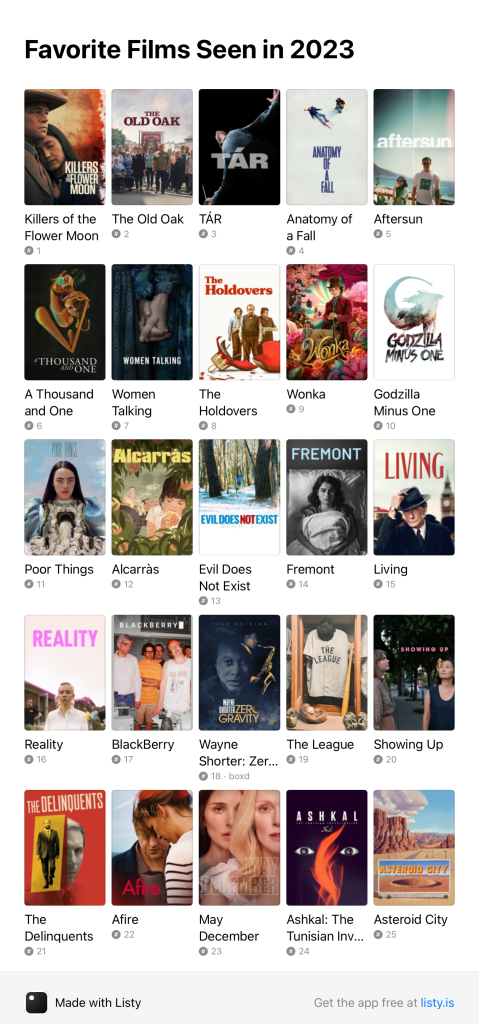
Favorite Albums Heard in 2023

These are the most inventive, boundary-crossing, provocative, entertaining, and eclectic albums that caught my attention this year. Not a “best of” by any stretch, but an overview of where my tastes lie (Jazz and roots music) and what I had time to sample. I lean toward artists whose work borrows heavily from a range of traditions, combinations of rock, folk, blues, soul and jazz heavy on the saxophone, piano and in one glorious example: the trombone (see Jennifer Wharton’s glorious Grit and Grace).

The first album on my list is by Adeem the Artist called White Trash Revelry. The album was released in December of 2022 but I first listened in the early part of 2023. The singing and songwriting combines evocative storytelling about growing up pansexual, with left politics, in the South. The heartfelt passion, intelligence and humanity of the lyrics comes through in every song.

Sunny War is an electrifying artist who borrows from folk, bluegrass, blues, punk and soul—old and new—in emotionally charged, effervescent songs about longing, forgiveness, pain, and reconciliation. The album grabs attention from the beginning.

Lakecia Benjamin delivers a fiery, inspirational, multi-faceted and celebratory romp through politically charged and soulful tunes that dance and float with abandon. Benjamin pays tribute to the voices and spirit of women artists, activists and organizers, led by the first tune that includes the voice of civil rights activist and author Angela Davis. Truly inspiring musical adventure.

My favorite Jazz artist of all time remains Charles Mingus. This year saw a release of his complete 1970s recordings with Atlantic Records, which includes some of his best work, such as four of his late period classics, and his last great album, Cumbia and Jazz Fusion.

Jaime Wyatt’s album Feel Good produces a rich soulful sound that blends blues, rock, country and folk with passionate vocals and lyrics. Wyatt’s opening number features a powerful chorus and lush arrangement accentuated by boisterous organ to heighten the bluesy vocals of Wyatt, singing urgently about the costs and consequences of global warming.

There are lots more here, including a new album from the great saxophonist Chris Potter, the full orchestral soundscape of The Black Gold Orchestra’s album Genesis, the passionate lyricism and wonderfully produced record Time Ain’t Accidental that accentuates the magical writing and shifting emotional tones of Jess Williamson, the tribute to Mahalia Jackson that becomes an innovative ode to passionate creativity and soulful rapture from James Brandon Lewis, and the powerfully effervescent and straight-ahead folk, bluesy country and bluegrass of acoustic guitarist Molly Tuttle on City of Gold. This year’s list is filled with high quality musical production and sheer fun—I hope you are inclined to sample what looks good to you….


Climate Change Deniers Play Insurance Grift

Floridians are paying three times more for home insurance than they were five years ago–the average homeowners insurance payment is $6000 compared to just under $2000 in 2019. The costs will take another leap next year.

Meanwhile, Gov. Ron DeSantis and the Republican legislature have been gifting insurance companies with more tax breaks, subsidies of $1 billion to help pay reinsurance costs–the amount the insurers borrow to pay for increased costs of covering homeowners policies, and making it harder for homeowners to sue insurance companies that fail to honor their contractual obligations.

This is political grift by Florida Republicans who have taken $9.9 million from insurance lobbyists since 2019, according to a report by Florida Watch. This money has flowed to Friends of DeSantis and to the Republican Party of Florida.

The political line of DeSantis and Florida Republicans is that much of the increased costs of insurance is driven by out-of-control lawsuits peddled by attorneys and third parties who have colluded to flood the industry with frivolous claims. Florida law has allowed a transfer of legal claims from homeowners to third parties who have then exercised their rights to sue insurance companies for alleged failures to honor the obligations of policies.

The Florida legislature passed a bill during the 2022 legislative session that prohibited some of these claim transfers, though loopholes remain, in addition to making it more difficult for homeowners to sue insurance companies. Homeowners now have to pay the full legal costs of lawsuits if they are unsuccessful, which is designed to tilt the playing field even further to the advantage of insurance companies.

Over the last two years, Florida insurance companies have altered the work of licensed adjusters to slash the claims of Floridian homeowners by as much as 97 percent, according to a detailed study in the Washington Post. In other words, the insurance lobby has felt emboldened by DeSantis and the Republican legislature to override claims and to lower their obligations to policy holders by whatever means necessary.

At the same time, it is not escalating lawsuits that are the primary factor driving up insurance costs in Florida. The lawsuits are concentrated among a wealthy group of litigants and directed toward a minority of firms within the insurance market of the state. If the lawsuits were the primary reason for escalating costs, their impact would be more dispersed across the Florida insurance market.

Climate change is the elephant in the room driving the rates of Florida insurance sky high. This is manifested by the increasing frequency and intensity of hurricanes in recent years, which has been the biggest factor increasing costs for insurance companies, resulting in several large companies leaving the state and/or dramatically reducing their exposure. The companies that remain are smaller, have less capital to pay high claims and have to borrow money on the reinsurance market to afford day-to-day operations. Lenders in the reinsurance market have hiked their rates due to a combination of climate change modeling (anticipating more deadly and frequent storms), increased costs of borrowing, and increased dependence on creditors.

The upshot is that the insurance market is ill-equipped to deal with climate change. The way insurance works is to spread unrelated costs across all policyholders so that everyone pays for damages suffered by a smaller subset of holders. Climate change breaks this model by the increased severity, frequency and large-scale impact of environmental costs across a wider group of policyholders.

In response, Florida Republicans, encouraged by wealthy developers and real estate speculators, engage in climate change denial and offer only “market solutions” to a crisis rooted in systemic environmental devastation. The “market” means that rich developers can expand wherever and whenever they want, courtesy of deregulation, lower taxes and public subsidies. The rest of the “market,” working class and middle class homeowners, have to fend for themselves. The rich can afford to sue each other, while DeSantis and the Republican legislature wants to make it cost prohibitive for ordinary homeowners to fight back.

What Does “Working Class Voter” Actually Mean?

I was trained in the discipline of political science, which has never had a good history investigating or understanding the term “working class.” Mainstream political science has tended to avoid acknowledging that class categories even exist, preferring instead to ask why the U.S. has been “exceptional” in its lack of class conflict (despite the evidence to the contrary). When “class” has been discussed, it is typically conflated with income or with education in much of the political science scholarship. Another way of saying this is that Weber has long triumped over Marx in political science and in many of the other social sciences as well (despite the fulminations of conservatives that academia is dominated by Marxists!–I wish).

The Weberian tradition defines class by income and therefore collapses a wide range of categories of employment and ownership into overlapping income brackets. In other words, a Weberian definition of class would conflate small business owners with workers when both occupy the same income tier. Depending on how much income a worker gets in wages, that worker might be categorized in a Weberian definition as lower class, lower-middle class, middle class or even upper-middle class. A small business owner might occupy the upper-middle class or lower-upper class category, depending on income status. The same goes for professional-managerial jobs, which under the Weberian definition could end up in more than one category, depending on the income of the professional-manager.

A Marxist definition defines class and “working class” very differently, based on a person’s relationship to the means of production. Working class is defined as those who are forced to sell their labor-power for wages; capitalists are those that own the means of production. In this formulation, the relationship of the working and ownership classes to each other is the central definining feature of capitalism. For Marxists, the working class exists in relationship to the private ownership of capital; the sale of working class labor-power to capitalists is the driving feature of the capitalist system. The ownership of the means of production structures and informs power relationships throughout capitalist society, including catogories that fall in between capitalist and workers, such as small business owners and professional-managers, who occupy a middle tier which is also defined, in Marxist terms, by this tier’s relationship to the dominant class ownership structure in society–in other words, the large-scale capitalist owners of production have dominant economic, political and social power within capitalism.

Political science is generally not focused on the Weber-Marx debate, which is considered passe now, though there have been periods in the history of the discipline when socioeconomic questions of class and “elites” were more front and center, often dependent on the rise and fall of class conflict in US society. Mostly political scientists focus on how governing institutions operate, the political “rules of the game” that inform dominant instututions and establish the relationship between the rulers and the ruled. In mainstream political science, this means a scholarship focused around the legitimacy of the rulers, the institutions that provide stability for the system, the motivations and behavior of political elites in relationship to voters, and in electoral systems, the way that public opinion, voter preferences and voter mobilization informs the choices of political parties.

Mainstream political scientists are now having a debate about the two dominant political parties in the U.S. in relationship to working class voters. The debate is about whether or not there has been enough of a shift of working class voters to the Republican Party, and away from the Democratic Party, to constitute a realignment of the voting blocs that each Party depends on to get elected. The debate hinges on how to define “working class” and whether or not this “working class” is switching its party allegiances, as well as how to understand the power and influence of business within each party coalition. Proponents of the party realignment thesis, Eitan Hersh at Tufts and Sarang Shah at Berkeley, argue in their recent paper “The Partisan Realignment of American Business,” (discussed in Thomas E. Edsall’s latest NYT column of August 16) that the Democratic Party is becoming a party of socioeconomic elites rather than labor and the Republican Party is becoming less of a business party and more of a party of “working class social conservatives.”

The arguments of Hersh and Shah epitomize the long-term inability and unwillingness of mainstream political science to seriously interrogate the socioeconomic class structure of American politics. The assumptions of Hersh and Shah, as reflected in their recent paper, are wrongheaded in several areas: First, that the Republican Party is moving away from a base dominated by business and socioeconomic elites, and second, that the Democratic Party has ever been a labor party. Corporations and the wealthy continue to dominate fundraising, lobbying and financing of think-tanks and policy-planning organizations for the Republican Party, whose policies remain heavily tilted in favor of rich donors. At the same time, the Democratic Party has long been dominated by owners of capital, and this has been well-documented in terms of who disproportionately funds Democratic Party candidates, which lobbies dominate access to the Democratic Party lawmakers, and which organizations disproportionately finance Democratic think-tanks and policy-planning organizations. Business organizations have exercised power in each of these three areas throughout the history of the Democratic Party, including the realignment that led to the New Deal coalition in the 1930s. It is true that organized labor increased its influence and power within the Democratic Party during the height of the New Deal, which owe a great deal to conflicts and divisions among business elites as well as large-scale labor movements and strike waves, which at times shifted policies in a relatively pro-labor direction.

However, since the right-turn of the late 1970s, early 1980s, business power has grown stronger and less contested within the Democratic Party. The thesis advanced by Hersh and Shah is wrongheaded in their assumption that the Democratic Party is moving toward a base of socioeconomic elites. The dominant power blocs within the Democratic Party have not just been socioeconomic elites, but large-scale capitalist owners who exert their power through campaign contributions, lobbying money and donations to prominent Party think-tanks, foundations and policy planning organizations. Instead of examining who has long dominated the investment profile that the Democratic Party is beholden to, Hersh and Shah assume that the Democratic Party’s support base rests within its electoral coalition. Here they marshall evidence that this electoral coalition has shifted away from “working class” voters and toward “socioeconomic elites.”

There are considerable problems with the thesis of the working class shift as well, primarily the measurements used to define “working class.” As consistent with the Weberian tradition in political science, “working class” is defined by a combination of income and education, but here education takes front and center stage, which allows Hersh and Shah to define working class as those without a college degree. It’s true that this measures significant numbers of working class people, but it also captures as many as 10 million “voters,” who are not working class voters according to the Marxian definition, but instead are business owners, mostly quite rich, and mostly local and regional leaders of the pro-Trump insurgency in small towns and regions of the U.S. This is not just a “little” mistake, but one that compounds a history of poor theorizing when it comes to conceptualizing a meaningful definition of working class in U.S. capitalism.

A better way to capture what is happening: both parties are going through an institutional crises due to decades of plunder by a largely unaccountable ruling class that has exercised increased control over the economy and the state. That crisis has seen shifts in voting allegiances. Working class voters have shifted from the Democratic Party to the Republican Party, though the shift is less than implied by Hersh and Shah for two reasons. The first is that working class voters are split by occupation, with manufacturing workers increasing their votes for Republican candidates but service sector workers, the largest category of the working class by far, consisting of 70 milion members, continuing to vote Democratic Party. In fact, even if we stick with the Weberian category of income, working class voters with the lowest income (below $50,000) voted for Biden over Trump in the 2020 Presidential electionby a margin of 57-43%; Biden also won voters making between $50,000 and $99,999 by a margin of 56-44%. Trump won 54% of voters making $100,000 or more.

The reason the working class realignment theory is being advanced by some political scientists is due to poor measurements of class, overwhelmingly defined by education, specifically those with a college degree versus those without. That’s a poor measure that does not even track the Weberian income measure of class very well. Second, the tendency to conflate working class with manufacturing workers (and white workers) is also prevalent. This fits well within the electoral college of U.S. politics, which gives disproportionate voting power to low populated states and to low-populated areas, including rural areas which have long voted Republican and have in fact been hit hard by a massive socioeconomic redistribution from poor people to rich people. These areas in many cases increased their turnout and thereby aided Trump and the Trump voting coalition that the Republican Party is depending on. This has not realigned U.S. politics, however, as the policies of the Republican Party have continued to be much more favorable to business interests and the wealthy, while the Democrats have continued to juggle a wider range of interest groups, more diverse and varied, within a big tent that has long been directed by corporate interests and the privileged position of socioeconomic elites in American capitalism.

The Liberal Ideology of Oppenheimer

I had conflicted feelings in anticipation of the recently released Oppenheimer film. On the one hand, I admired the book, American Prometheus, that the film was based on. Written by historians Kai Bird and Martin Sherwin, the 721-page biography was a magisterial achievement that covered Oppenheimer from birth to death, contextualized by the insights of expert scholars who were able to frame the circumstances that shaped Oppenheimer. On the other hand, I have long felt that movie director Chrisopher Nolan’s filmmaking was overrated. His directing has always exhibited a technical virtuosity that too often eclipsed attention to character development.

The Oppenheimer film is a collision of the best of the book, which the director at times manages to capture within a sprawling arc of filmic biography, with the worst of Nolan–the technocratic flourishes often do not allow the viewer to get fully immersed in the characters, flattening too many scenes because of the expansive coverage of the breath of Oppenheimer’s scientific life. At the same time, there is an energy in the presentation and the acting that makes it immersive in grappling with important political and existential questions: the threats posed to humanity by the creation and expansion of the atomic bomb and the witch-hunt mentality of the Cold War US establishment that seeks to punish any dissent from the orthodoxy of nuclear weapons expansion.

The best aspects of Oppenheimer are Nolan’s depiction of the inquisition of the scientist by a three-member security panel assembled by the Atomic Energy Agency to interrogate Oppenheimer. At the time of the 1954 “hearing,” Oppenheimer’s security clearance had already been revoked by the Chairman of the Atomic Energy Commission, Lewis Strauss, brilliantly played by Robert Downey, Jr. Oppenheimer had asked for a hearing to establish a process whereby he would be able to defend himself from accusations that he was a Soviet spy, a baseless account largely manufactured by powerful and unaccountable political operatives led by William Liscum Borden, former executive director of Congress’s Joint Atomic Energy Committee, the FBI Director J. Edgar Hoover and Strauss himself.

Nolan’s direction and script, heavily indebted to the book (Bird and Sherwin are listed as co-authors of the screenplay), is at its best in contrasting Oppenheimer’s life with the manufactured witch-hunt orchestrated by key architects of the U.S. security establishment. The Oppenheimer film succeeds, within certain limitations, in providing a sense of how corrupt and unaccountable the U.S. national security establishment often was, even to one-time “national heroes” such as Oppenheimer. The “hearing” was an unbridled inquisition, in that Oppenheimer’s lawyers, lacking security clearance, had no access to classified information used liberally to build a false case against the scientist, including the outlandish and unsupported charge that Oppenheimer was a “Soviet spy.” This “finding” by the three-member security panel was used to justify a 2-1 ruling stripping Oppenheimer of his security clearance.

Despite powerful scenes of Cold War hysteria, Oppenheimer the movie limits audience awareness of the scope and scale of the Cold War witch-hunt. That’s largely due to the extreme focus on Oppenheimer the individual, whose character is often so limited to the expressions and reactions of Oppenheimer himself (well-played by actor Cillian Murphy) that the larger systemic causes and consequences of the nuclear arms buildup gets minimized. Nolan’s choices to center almost every scene around an Oppenheimer reaction to events reduces the film to liberal individualism, whether intentionally or not. The limits of this approach are readily apparent in two crucially important scenes: the testing of the Atomic Bomb in the Alamogordo Bombing Range (125 miles south of Albuquerque, New Mexico) and the use of the atomic bombs in Japan. In both cases, we see nuclear explosions through the eyes of Oppenheimer and his immediate scientific and military team, a choice which serves to remove from the frame the fact that atomic testing produced direct casualties from nuclear radiation on the surrounding New Mexico population. The costs and consequences of the New Mexico atomic tests were replicated in other locations, both in the U.S. and globally, and had severe consequences in many other locations to health and mortality. By 2022, the U.S. had conducted 1,054 atomic tests, costing more than $100 billion.

The film, though, actually limits a broader understanding of the costs and consequences, and as such does not give the viewer a proper scope of the extent to which U.S. society was dominated by the one-sided viewpoint of the military-industrial complex. Instead, the contradictions of nuclear armament appear in simplified terms: as an existential morality play in the conscience of Oppenheimer himself, rather than a deep-seated power-structure that ran roughshod over dissent, creating a McCarthyist witch-hunt mentality that rewarded subservience, punished critics and was weaponized the most against workers, artists, intellectuals and dissidents, whose voices would be silenced in favor of the profit-making objectives of the military-industrial complex. We see reflected in Oppenheimer’s eyes his vision of the horrific scope and scale of the weapon he has helped unleash against Japan, when he addresses a public audience who reveres him for helping to “win the war” against Japan. Oppenheimer plays to the audience in his speech, while the audience in the movie theatre only sees what Oppenheimer’s imagination allows us to see, not what the Japanese actually experienced.

Nor do we get from the film the opposition to the use of the atomic bombs in Japan from a wide range of military Generals, including Dwight D. Eisenhower, Hap Arnold, Curtis LeMay, and Admirals Bill Leahy and even the nororious racist Admiral William “Bull” Halsey. All opposed the decisions to use atomic weapons for the simple reason that conventional bombings had already “brought Japan to its knees,” according to Arnold and LeMay. We now know, through the scholarship of Gar Alperovitz and others, and the release of classified documents, that the bomb was dropped for two reasons: first and foremost, to keep the Soviets from expanding their troop presence in Asia by sending a signal of U.S. power, and second, because the bomb was so exorbitantly funded. According to the work of Martin Sherwin: we dropped the bomb to provide a visible result of the sheer costs and magnitude of the resources devoted to this development of U.S. power. The use of the bomb was a demonstration of U.S. global militarism that prefigured a large-scale military-industrial complex which followed profit motivations more closely than “national defense.”

The criticisms of this nuclear weapons expansion do surface in Oppenheimer, but are at best secondary and undeveloped next to Oppenheimer’s own existential crisis. The script does not do justice to most of the secondary characters, especially the women characters, who are treated as an afterthought, an appendage to Oppenheimer himself–most blatantly in a graphic depiction of Oppenheimer having sex with his former lover, Jean Tatlock, in his own imagination during the three-panel interrogation, in full view (in Oppenheimer’s guilty conscience) of his wife, Kitty Oppenheimer.

The scientists who oppose the further development and use of the atomic bomb are depicted briefly, but given short shrift and uneven, at best, character development. Albert Einstein as portrayed by Tom Conti emerges as a bit of a cartoon figure. The fact is Einstein did not request or get a security clearance; his politics of opposition to U.S. militarism and his socialism were made clear to the establishment as Einstein courageously spoke out against the consequences of succumbing to the national security establishment’s terms of subervience. To the movie’s credit, one of Einstein’s interactions with Oppenheimer produces a prophetic warning of the dangerous game that Oppenheimer has played: trying to change the system from within only to be sacrified by the system for the sake of preparing the way for humanity’s imminent destruction.

The fact that Nolan is willing to push the outer limits of a liberal critique of the system by including Einstein’s prophetic warning to Oppenheimer is a strength of the movie. The fact that the script only allows the viewers to see the nuclear buildup through the eyes and consciousness of Oppenheimer himself is too often a weakness of the film’s liberal individualism, which fails to capture the systemic power of a growth of a military-industrial complex whose casualties go way beyond Oppenheimer himself. It’s gratifying to see a major Hollywood film and a prominent director tackle the existential crises of the production, development, and expansion of nuclear weapons. But it’s disappointing to see this reduced to a “great man” version of history.

Ultimately, I would recommend seeing the movie, as it has plenty of strengths to offer, and introduces viewers, however unevenly, to important existential questions about the costs and consequences of nuclear arms expansion. However, the film is far from sufficient in educating viewers about the larger political, economic and social context that produced and dramatically expanded the deployment of nuclear weapons around the world. For that, viewers need a broader education that the movie Oppenheimer often cuts short.

The Marlins Kim Ng Era Reaches Milestone First Half

The Miami Marlins record at the halfway mark of the 2023 season is 47-34, which is second in team history to the 1997  World Series champion Florida Marlins, who were 48-33 at the same point. How has this happened? What might we expect going forward?

First, it’s time to note the successful moves made by General Manager Kim Ng, who is rightly receiving congratulatory plaudits on Marlins social media for helping to steer the team in a better direction post-Jeter. The first big decision of the 2022 offseason, arguably the first full offseason where Ng has had the most authority to guide the team in a different direction, was the hiring of Skip Schumaker as the new Marlins manager. According to several Marlins players interviewed, from Garrett Cooper (“this coaching staff is better than what we’ve had”), to Jazz Chisholm to Sandy Alcantara, the clubhouse culture has never been better. Of course, clubhouse “culture” and “chemistry” are so readily used as catch-alls for team success that it is rather meaningless by itself. Did winning change the culture? Did the culture change lead to winning? These debates are by definition circular and therefore impossible to resolve.

What we do know is that the new manager and coaching staff have worked with the Marlins analytics department and front office to successfully address at least two problems identified from the failures of 2022:  hitters with high strikeouts/lack of contact and poor infield positioning that allowed hits to get through. These were areas that Kim Ng and her front office prioritized in the offseason. The hiring of a hitting coach, Brant Brown, who preached bat to ball skills and contact rate, coincided with a player acquisition strategy of acquiring high contact hitters. The trade for Luis Arraez is the high-water mark of this approach, successful beyond anyone’s expectations thus far, as Arraez has been around a .400 batting average all year with contact rates that make him a unicorn among contemporary players–he’s more Tony Gwynn and Rod Carew than anyone playing in today’s game. He also has a wRC+ of 158–second in the National League to Ronald Acuna Jr.–in runs created above league average, weighted by type of hit and for league context. Ng’s trade for Arraez has been pivotal to this team’s success, both in the stellar half-season provided by Arraez and by the example he has set for other players. Several Marlins players have noted his influence on their approach to hitting for more contact, especially with two strikes, and taking the ball the other way. Jesus Sanchez turned his season around, and is at his best, when he hits the ball to the opposite fielf. Even Jorge Soler has been a making better contact his year, which has also helped him optimize his power stroke. He and Arraez have been a killer one-two combo in the Marlins lineup. Garrett Cooper credits new hitting coach Brant Brown with helping him find more consistency in hitting the ball up the middle with authority. Bryan de la Cruz and Sanchez have worked extensively with Brant Brown in shortening their strokes to generate more hard contact the other way, especially with two strikes.

So when we talk about “culture,” it’s more meaningful to talk about whether or not players are “buying in” to what the new manager and coaching staff are selling. We have lots of evidence that they are. The Marlins were 26th of 30 teams in contact percentage in 2022. They are 9th in contact percentage in 2023. This year’s Marlins are 13th in on-base percentage; last year’s version was 27th. This adds up to a Marlins team that is average offensively (they still rank lower in power production), compared to a bottom five offense in 2022. Still not a great offensive team, but one that has advanced considerably in key areas of run production, which in tandem with outstanding pitching–among the league leaders in a range of the most important statistical categories despite a subpar Sandy Alcantara–has allowed the team to win close games and to hold other teams in check. The ongoing presence of major league pitching coach Mel Stottlemyre, combined with a strong pitching development and acquisition system, continues to produce results. Most notably the latest young phenom, Eury Perez, whose numbers are mind-boggling across the board, accomplishing what no 20 year old pitcher has ever done: specifically becoming the youngest pitcher since 1901 with 3 straight scoreless outings of 6+ innings (courtesy of the great Sarah Langs). Braxton Garrett has been the season’s surpising rotation anchor with command of five pitches he can throw for strikes at any point in the count–slider, sinker, cutter, curveball, and changeup–to carve up hitters without the high-end stuff of his rotation counterparts. Jesus Luzardo has been solid and at times he can blow opposing teams away with his upper-tier velocity and spin. The rotation has produced beyond the sum of its parts, and despite injuries to Trevor Rogers and Edward Cabrera. This becomes evident when looking at how the Marlins rank on six of the sabermetric stats posted by Fangraphs: top five in WAR, FIP, xFIP, SIERA, K%, K-BB%.

The other area where the new manager and coaching staff have outperformed last year’s version is infield positioning. Despite the infield shift restrictions, there are still advantages to positioning your infielders optimally. No one does that better than the Marlins analytical and coaching staffs, who have worked together to give the team the most runs saved in MLB as of June 29:  18 runs saved on the season (see Sports Info Solutions, “Reeling Them In–Marlins Infield Positioning Working Well,” by Mark Simon, June 29, 2023).

Can the Marlins keep us this pace?  In terms of qualifying for the playoffs, the odds are decidedly in the team’s favor now, as Fangraphs and other sites estimate their playoff chances to be in the 60% range. Still, the club does not have much room for error or injury:  the hitting is league average; the pitching is doing very well despite injuries and subperformance from Alcantara, who has looked much better of late. The team needs a healthy and productive Jazz and a consistent return to form from last year’s Cy Young winner. They also need to add a couple of pieces of quality big league production–ideally on the left side of the infield, at catcher and a veteran arm they can add to the back end of the rotation and/or bullpen. The front office has proven they can deal–and more chips need to be traded prior to the deadline if the team continues its playoff pace. 

GO FISH!

The Military to Gun Pipeline

++Daniel Defense, the manufacturer and marketer of the AR-15 used in the massacre of 19 schoolchildren and 2 teachers in Uvalde, Texas, secured a $20 million contract from U.S. Special Forces in 2002 to provide the accessories for combat rifles. The company’s military contracts led to civilian sales of AR-15s produced by the company, promoted by military-style marketing campaigns that advertised how civilians could “use what they use” (NYT, May 28, 2022).

++The sales of military-style assault rifles to civilians accelerated after 2004, when the assault weapons ban expired. U.S. wars post-9/11 in Iraq, Afghanistan and around the world through expanded counterinsurgency wars deepened this military-to-gun pipeline. Politicians, joined by prominent journalists and commentators, breathlessly celebrated dramatic expansions of the U.S. military budget, adding more fuel to an already expansive pipeline of foreign arms sales and domestic civilian sales, increasing the use of high-powered, military-style firepower from the ranks of the armed forces to police departments to gun manufacturers, with civilians being encouraged to “use what they use” (Goodman, Counterpunch, June 9, 2002).

++The U.S. gun culture is not a simple recent historical development. There was the political mobilization of the National Rifle Association in the 1970s as a purveyor of a single-minded expansion of unrestricted gun rights as the embodiment of “American freedom” guaranteed by the 2nd Amendment. This NRA-turn was reinforced by a mix of profit motivations, white supremacist ideology baked into U.S. history, the culture of rampant individualism, and a pervasive fear of “crime and disorder” accelerated by a white counter-reaction to the Civil Rights Movement of the 1960s that was strategized and encouraged by U.S. politicians–most notably President Richard Nixon’s “law and order” campaign.

++As Roxanne Doty documents in her excellent book, Loaded, the emergence of the U.S. gun culture has deep historical roots in the founding of the U.S. Property owners used “citizen militias” in the late 18th and early-to-mid 19th centuries. Landowners deployed men with guns to expand land ownership by the forced expulsion of Native Americans. Settler colonialism provided one of the original justifications for gun ownership, as did genocidal forays against Native popuations that stood in the way. Slave patrols used to track down, retrieve and force escaped slaves back to their owners, or to kill them outright if deemed necessary, was another motivation of property-owning gun rights enthusiasts early in U.S. history. Guns have long been linked to the protection of property rights regardless of the costs or consequences.

++The Cold War militarization of U.S. culture directly contributed to the expansion of more deadly firearms that could be accessed by the civilian population. As with the post-9/11 increases in military-style weapons made available to civilians, the increases in the U.S. military budget during the late 1970s and early 1980s coincided with a flood of high-powered weapons sold to civilians. Gun manufacters, backed by the NRA, moved aggressively to expand the manufacturing, marketing and sales of advanced weaponry, part of a strategy to reverse declining weapons sales. The ready availability of military-style rifles and high-capacity, high-caliber semiautomatic pistol designs since the 1980s provided opportunities for U.S. gun manufacturers to sell more deadly weapons at home and abroad (“The Miliarization of the U.S. Civilian Firearms Market,” Violence Policy Center, June 2011).

++The combination of U.S. militarization, white supremacy, rampant individualism, conspiracy theories that invent threats to property ownership in the form of government plans to “take away your guns,” and profit motivations of gun manufacturers has created a dystopian nightmare of routinized mass violence.

++The Republican Party has long embraced the availability of military-style assault weapons as equivalent to foundational “American freedom.” The Party’s open embrace of weapons-wielding citizens confronting Black Lives Matter protesters is the modern equivalent of historical trends of white supremacy and armed vigilanteeism that have fueled the weaponization of U.S. society. The embrace of militarization by both political parties further takes us down this untenable path, as police department budgets continue to explode and militarization of law enforcement continues to be used as puntive means to safeguard the interests of property owners while maintaining the conditions of rampant inequality that further fuels gun violence.

++What are the solutions? The left needs to target all sources of the violence, recognizing the ways that gun massacres are woven into a history of systemic institutionalized violence encouraged and abetted by militarization, policing, racism, profiteering gun companies, a war against oppressed and marginalized people, and conspiracy theories that provide fuel for rabid individualism that turns deadly. Two resources that can help: “It’s Time to Dismantle America’s Residential Caste System,” Politico, 9/12/21, and “Uvalde Police Didn’t Move to Save Lives Because That’s Not What Police Do,” The Intercept, May 27, 2022.

Marlins Are Failing at Start of 2022 Season

I’m taking a detour from my politics and culture posts to provide some thoughts about my favorite baseball team, the Miami Marlins.

Once again, the Marlins are playing way below their run differential, and many of their starting position players are playing well below their career norms, including their free agent acquisition outfielders, Jorge Soler and especially Avisail Garcia, who is now hurt along with several other players temporarily out or landing on the IL with minor injuries.

As in 2021, the starting pitching has been the only area of the team consistently above average. The bullpen has been okay except in the highest leverage ninth inning situations, where the Marlins continue to blow games. The hitting, once again, has failed the most, with only Jazz Chisholm and Brian Anderson consistently perfoming well among starters who have been mostly healthy. Jon Berti, Joey Wendle and Bryan De La Cruz  have been very good as utility guys, with Wendle playing a lot until his injury (he’s back now).

Since the new ownership took office and the new front office was consolidated under CEO Derek Jeter (who left before the 2022 season started) and now under Kim Ng and a nucleus that has been in place well before Ng, the organization has been mired in mediocrity. On the plus side, the overhaul of the Loria-era roster has produced a farm system loaded with pitching depth at every level. On the negative side, the organization has been among the worst of any MLB team in developing hitters and in plugging their roster with free agents that add value to the big league club.

The result for the MLB team for 2021 and again in 2022 has been a frustrating mess: in both years, to start the season, the team had outscored its opponents through the first 42 games. Yet, due to low run production and an inconsistent bullpen, the team has produced a woeful 18-24 start (now 18-25 in 2022), well below the pace of what just about all of the best statistical outlets predicted. Fangraphs predicted an 81-81 season. Baseball Prospectus 80-82, individual prognosticators for MLB.com predicted in the mid 70s. I picked 79 wins and a fourth place finish (they are in fourth place now amidst a very slow starting division outside the Mets) and former Baseball Prospectus writer Joe Sheehan predicted 85 wins.  

The problems loom large at the major league level for this franchise. The new sabermetrics is all about the ability of major league coaches and the front office to utilize statistical analysis and technology to develop hitters and pitchers at the major league level. As is true throughout their organization, the Marlins have done this very well with pitchers. However, the organization gets a failing grade, from the front office to the manager, in developing hitters. A residue of this has been that the team has a recent habit of going for long stretches with some of the worst players in Marlins history before having finally given up on many of them in 2021. The 2022 team is supposed to have more veteran depth, but the new player acquisitions have mostly hit below their career norms.

I have zero confidence that this team as currently constructed will turn things around. However, the pitching is too good, and the circumstances too recent, to justify anything approaching another rebuild. With all due respect to Don Mattingly–he should not take the exclusive blame for the losses, as he is one of many in the organization who has failed to achieve his stated goals–the beginning of his 7th year is more than enough for one manager to be here without notable success. The team needs a new voice. The front office also could use new voices, especially in hitting development and analysis. I would keep Kim Ng for now, as she has only been here a little over a year and the overall results have been a byproduct of the organization that she inherited.

The time to pivot is now, gradually, but with the realization that the current mix of players is not working. The first obvious step would be to bring up some minor league players to replace veteran 1B/DH Garrett Cooper and Jesus Aguilar, such as Lewin Diaz at 1B and Jerar Encarnacion at DH/OF. Send Jesus Sanchez, a young hitter I still like a lot, to the minors to let him readjust and get out of his own head/slump. Get Bryan De La Cruz more playing time. Put Elieser Hernandez in the bullpen. 

Eventually, the time may come to trade Jorge Soler, if he shows more plate consistency and therefore his value increases. Given his four year contract, his current injury and his terrible start, Avisail Garcia is untradable and the team will have to hope he gets better. We may have to get a future OF or potential impact bat through trade of a starting pitcher (Pablo Lopez perhaps when his value is as high as it is now). The organizational depth in starting pitching is still a strength.

Not a pretty picture, but this start is the second worst in team history only behind 2013. The organization needs to show some level of awareness and urgency. My top choices at the beginning of the offseason were for the Marlins to have already signed Starling Marte to an extension and to have acquired Mark Canha. The Mets added them both, which gave them a mix of contact hitters and power hitters that would have worked to elevate the Marlins as well. Instead we add players like Soler and Garcia to an already one-dimensional offense that includes Cooper (who can hit but can do nothing else well) and Aguilar (ditto).  The inability to get more significant high leverage bullpen help was also a problem that many of us criticized at the time.

We have at best a C-type organization (which might be generous) when we need an A-type organization. They need to get better and to show more urgency and creativity in the process.

My Favorites in Movies, Music and Books for 2021

At the end of each year I compile a list of favorites that helps me remember what I enjoyed and learned from the movies, music and books that I had time to engage with. These lists are far from representing the “best” of the previous year, but instead are a small sample of what I found to be exceptional viewing, listening or writing whose experiences lifted me emotionally, intellectually and spiritually. Such an exercise also helps me remember what I’ve seen, listened to, and read, with the goal of coming back to these works of art in the future. In compiling these lists, I rely on a few personal criteria for each category.

For movies, I include films that I found exhilarating because they evoked a passionate response from the storytelling, the characters and events chronicled, and the risks taken in bringing these versions of stories to the screen. I made a deliberate effort to include a significant number of films that are outside the Hollywood studio system and that were made without the institutional support or resources of that system. However, a good number of films with big budgets, big stars and strong institutional backing also made my list. While mainstream Hollywood traffics in blockbusters peddled to the lowest common denominator of profits and mass advertising that helps drive mass consumption and mass visibility, there has long been a tension between the corporate domination of film production and the efforts of film artists to creatively develop their projects in a way that breaks down traditional boundaries that are privileged by studio executives.

Artists who have a history of box office success can, if they choose, use that success as “capital” to advance projects that otherwise would not get funded. Therefore the gap between big budget Hollywood and quality filmmaking is not so cavernous as to be insurmountable. That being said, whether mainstream or not, I chose movies that pushed beyond the boundaries of expectations and, in many cases, represent the cutting edge of artistic achievement, in my view–which of course is highly subjective and dependent on my experiences as a viewer when I watched the film. Was I passionately moved by the storytelling, the characters, the social landscape, and the creative insights provided by the movie?

One movie on my list, Don’t Look Up, which I ranked 10th, has been the subject of polarized debates among film critics and mass audiences who had (mostly) radically different reviews of the film. Critics found it to be too full of simple stereotypes, repetition, overly lengthy sequences that were poorly edited, and mostly a collection (at best) of Saturday Night Live-type sketches that worked better in isolation than as part of a cohesive and entertaining film. Obviously, I disagree with this criticism. I thought the film was well-written, well-acted, funny and powerful in its portrayal of how the actions of powerful corporations and politicians are destroying the planet and blocking attempts of people to learn the truth about how our very survival is being sacrificed by ruling elites. That the filmmakers spoke to the politics of climate denial made it even more powerful and timely.

That being said, I do not think that the critiques of the film by most film critics can be reduced to those critics being in denial about climate change, which was a charge often made by the film’s supporters. I felt the film could have been better directed, better edited and more cohesive, and therefore more potentially powerful in execution. The art of film criticism is not without merit, and film critics are not inherently “elitist.” At its best, film criticism can elevate great art by enhancing audience appreciation–the job of the film critic is not inherently “elitist,” nor should we automatically accept the opinion of film audiences over film critics. The social, political and economic context affects how films are made, marketed, perceived and understood, which complicates the task of the critic and the understanding of the audience.

However, I do think too many film critics are guilty of not viewing a film holistically, so that film “quality” is artificially separated from social, political, economic and historical context. Too many reviewers seemed blissfully unconcerned about where the filmmakers’ anger was coming from, namely from the urgency that humanity is facing global extinction, which was mostly not even discussed by critics in grappling with the “quality” of the film. Too often the urgency of the filmmakers was derided as too “angry,” “simplistic,” and “one-sided,” as if the issues posed by the film could have been better packaged with a more nuanced treatment of an extinction event. The vapidity of the critiques exist within a cultural ecosystem that insists on separating “artistic value” from “politics,” when in fact such a separation reflects a narrowness of critical interpretation.

Good film criticism can also be a work of art, adding layers to our understanding of what we have seen. That means the best critics understand that their reviews exist within a larger socioeconomic and political power structure, with consequences for what films typically get made and how they get promoted, consumed and examined. As the politics of climate change have become about existential survival, a film that is politically angry is exactly what we need for the extinction moment that we face. Critics, whatever their feelings about how well the film achieved its mission, were unwilling to discuss the political urgency of the mission, which proved more revealing about the narrowness of contemporary film criticism than the shortcomings of the film itself.

With that as a backdrop, here is my list of favorite movies of 2021:

  1. Summer of Soul
  2. Nomadland
  3. The Card Counter
  4. West Side Story
  5. Bring Your Own Brigade
  6. The White Lotus (series)
  7. Power of the Dog
  8. Identifying Features
  9. Licorice Pizza
  10. Don’t Look Up
  11. Dear Comrades
  12. Sun Children
  13. Velvet Underground
  14. All Light, Everywhere
  15. Nightmare Alley

My next lists are more expansive, with 20 favorite albums and books. If anything, it was much easier for me to find great music and great books, fiction and nonfiction, in 2021 than great movies. The music list reflects my own biases toward jazz, soul, blues and alternative rock, and folk, which necessarily narrows my consideration for this top 20 list. That being said, the criteria for selection are similar to the criteria used for movies: did the music passionately engage my senses? How creative was the artistry, from the quality of the musicianship to the collaborative engagement within each song to the quality of the songwriting? I discovered quite a few albums this year that I repeatedly listen to, which is another criteria for making this list:

  1. Arturo O’Farrill, Dreaming in Lions
  2. Amythyst Kiah, Wary + Strange
  3. Adia Victoria, Southern Gothic 4.
  4. Cha Wa, My People
  5. Delvon Lamarr Organ Trio, I Told You So
  6. Rising Appalachia, The Lost Mystique of Being in the Know
  7. Courtney Barnett, Things Take Time, Take Time
  8. Buffalo Nichols, Buffalo Nichols
  9. Chris Brashear and Peter McLaughlin, Desert Heart, Mountain Soul
  10. Cedric Burnside, I Be Trying
  11. Nicole Glover, Strange Lands
  12. Christone “Kingfish” Ingram, 662
  13. Eric Bibb, Dear America
  14. Jimbo Mathus, These 13
  15. Benito Gonzalez, Sing to the World
  16. Mingus at Carnegie Hall, Deluxe Edition Remastered
  17. Gov’t Mule, Heavy Load Blues
  18. UV-TV, Always Something
  19. Nina Simone, The Montreaux Years (Live)
  20. Tower of Power, 50 Years of Funk and Soul

The books that made my favorites list include an impressive and expansive analyses of the global rise of fascist political movements, the history of structural and institutional racism, the political economy of the COVID-19 pandemic, and the causes and implications of global inequality and climate change, among a range of other important topics and themes. I also included works of fiction that directly addressed some of these same themes:

1. Andreas Malm and the Zetkin Collective, White Skin, Black Fuel: On the Danger of Fossil Fascism.
2. 1619 Project
3. Adam Tooze, Shutdown: How Covid Shook the World’s Economy
4. Imbolo Mbue, How Beautiful We Were (novel)
5. Harsha Walia, Border and Rule: Global Migration, Capitalism and the Rise of Racist Nationalism
6. Dave Zirin, The Kaepernick Effect
7. Daniel A. Sjursen, A True History of the United States
8. Andrew Cockburn, Spoils of War: Power, Profit and the American War Machine
9. Deepa Kumar, Islamophobia and the Politics of Empire, 2nd Edition.
10. Economics and the Left: Interviews with Progressive Economists.
11. Luke Epplin, Our Team: The Epic Story of Four Men and the Workd Series that Changed Baseball.
12. Donald Sassoon, Morbid Symptoms: Anatomy of a World in Crisis.
13. Noam Chomsky and Robert Pollin, The Global Green New Deal
14. Craig Whitlock, The Afghanistan Papers: A Secret History of the War.
15. Joe Posnanski, The Baseball 100
16. Russell Banks, Foregone (novel)
17. Javier Blas and Jack Farchy, The World for Sale: Money, Power and the Traders Who Barter the Earth’s Resources.
18. Ted Gioia, The History of Jazz, 3rd Edition
19. Robert L. Allen and Chude Pamela Allen, Reluctant Reformers: Racism and Social Reform Movements in the United States, new edition.
20. Sarah Pinkser, We Are Satellites (novel)

The Left and Liberalism

I define the “left” as those that argue for major structural change in societal institutions from the economy to the political system to further an egalitarian economy and polity. How to go about fighting for structural change is about tactics, strategy and goals, which fractures the left into a wide range of diverse categories, each with its own history and political objectives. These include left social democrats, socialists, communists, and anarchists. Even these differentiations are complicated, with socialists and communists divided by the degree to which their envisioned future societies will have a mix of public and private ownership, or will abolish the capitalist market outright.

Within capitalist societies, those on the left often refer to those who dominate the political and economic system as the “ruling class.” This class, as a collective group of dominant capitalist interests, has power as a result of its ownership of societal resources, which it owns and manages for profit. Diverse groups of capitalists often come together to preserve and expand their profit-making opportunities, and rely on their ownership of wealth and their power within the capitalist state to protect their collective interests.

Capitalist states face contradictions due to the conflicts between the profit-making interests of the capitalist class and the public legitimacy of state institutions under capitalism. During different phases of capitalist history, workers, the middle class, progressive reformers and the poor have challenged the capitalist state to expand its functions and purpose beyond serving the needs of capitalist owners. As a result, societal groups have been able to win reforms under capitalism, but those reforms are always in danger of being reversed when capitalist owners face a crisis of profitability.

During the period from 1980 until the present, capitalist interests, often competing with each other based on where and how they make their profits, have increased their instrumental power over the capitalist state through a dramatic rise in the number, scope and capacity of business political lobbying networks. Transnational corporations have used their global wealth and their market and political power to lobby governments to reduce progressive taxation (a global trend), to reduce corporate taxes (a global trend), to increase the direct subsidies provided by states to corporations (a global trend), to privatize public services for profit (a global trend) and to hollow out the capitalist state to make it less responsive to the interests of the public (a global trend).

In this way the political parties within capitalist democracies have moved steadily to the right over the most recent four decades of capitalist history, often referred to as “neoliberal capitalism.” Social Democratic political parties and other parties historically claiming to represent the interests of workers, have on many occasions advanced right-wing, pro-corporate policies that were opposed by many of their own constituents. This process, a function of capitalist interests being deeply embedded within capitalist states, have served to de-legitimize capitalist state institutions, leading a prominent scholar to argue that democratic rule within contemporary capitalism is facing a severe crisis that could lead to its extinction (Streeck 2020).

The crisis of democratic capitalism is directly connected to the contradictions between capitalist profit and capitalist political institutions. This crisis has created a legitimacy crisis for dominant political parties as they shift to the right of the spectrum as a result of the intensification of capitalist demands for more profit-making opportunities, less taxation and more state assistance to subsidize capitalist profits during times of economic crises. This has paved the way for “outsiders” such as Donald Trump, Jair Bolsonaro and others to claim to mantle of representing the opposition to the entrenched “political class.”

Contrary to this rhetoric, the far right and the neo-fascist right is very much a part of the capitalist establishment. They represent sectors of capital who see a profit-making opportunity in a further de-legitimation of the capitalist state, which promises more profit-making for sectors of capital that depend on even more de-regulation and sale of public assets for accumulation of profits. Not all capitalists agree with this frontal assault on capitalist institutions, but many capitalist sectors have promoted the very same policies championed by Trump and Bolsonaro.

For example, in the U.S., a wide range of business organizations had been financing efforts to make voting more difficult for workers, minorities and the poor for the past decade as part of a broader effort to support legislation on a state-by-state basis that would cut taxes, reduce social spending, increase subsidies to corporations and produce a much more regressive taxation system whose burdens would fall more heavily on workers and the middle class. When the Republicans continue this effort on overdrive under Trump, they are in fact intensifying an effort that has long had the support of powerful blocs of U.S. business lobbyists and corporate networks.

The fact that the Democratic Party is opposing voter suppression and beginning to challenge some of the neoliberal policies that have been advanced over the past four decades (which have in most cases been supported by both parties) does not mean that the Democratic Party has broken with corporate interests. Quite the contrary. What it does mean is that there is conflict within the capitalist class over government policy. The Biden Administration has advanced legislation, such as the American Rescue Plan, that has spent three times more on unemployment, housing, family assistance, COVID-19 emergency aid, and aid to states, counties and cities, than the Republican Party wanted to spend.

The sheer scope and scale of the Democratic Party’s American Rescue Plan has led some observers to suggests that the Democrats are signaling a break from the past four decades of corporate-friendly government policies, or a broader break from neoliberalism. That pronouncement is premature, and ignores the extent to which both Democrats and Republicans just months before endorsed the CARES Act, an extremely corporate friendly expansion of COVID emergency aid whose wealth overwhelmingly went to the coffers of the biggest U.S. corporations, while very little found its way to working people or the poor. In fact, as has been documented extensively, the rich have gotten far richer during the COVID crisis, either by using their market power and wealth to make more money or by being bailed out by an interventionist state which still privileges capitalist interests above societal interests.

With that in mind, how should a person on the left respond to capitalist conflict within the dominant capitalist political parties? First, the left should understand the urgency of protecting public access to governing institutions. The Republican Party has coalesced forces that have historically supported an evisceration of social services that benefit the working people and the poor. And Republicans represent the segments of the capitalist class that are most in favor of using all means necessary to wage war against voting rights, scapegoat minorities and immigrants, and maintain neoliberal capitalism by restricting public money to working people. While the Democratic Party is no friend of working people, there are real consequences for the U.S. working class in losing voting rights, having less access to (even meager) public services, and demonizing minorities within the brazen rhetoric of white supremacy that lately has eroded the autonomy of K-12 teachers in several states to teach history in a way that is truthful to an understanding of institutional and systemic racism.

This means that the left needs to fight against voter suppression, defend the most oppressed sections of the working class, mobilize on behalf of minority rights and access, and champion more economic relief for workers and the poor. That does not mean becoming part of the Democratic Party. The left needs its own institutional networks, its own movement identity, and its own connection and embeddedness to the U.S. working class, whose interests have been drowned over the last four decades under the weight of corporate power.

The left should not shy away from defending liberal institutions whose very existence is predicated on a history of working class struggle. This includes being committed to opposing voter suppression, and advocating for an expansion of voting rights, which had been achieved historically as a product of working class struggle. Now these rights on under assault by a neo-fascist Republican Party which is also intent on passing state laws that prevent cities and counties from reducing the money going to local police forces (see Governor DeSantis in Florida) and prevents teachers in K-12 from teaching the truth about institutional and structural racism.

There has been momentum among what I would call a “class-reductionist left” in the U.S. to minimize the importance of these political and social struggles. This “class-reductionist” left does not see a threat from the “neo-fascist” right It sees the Republican Party as barely distinguishable from the corporate liberalism of the Democratic Party. Even more worrisome, some sectors of the left mistakenly think that capitalist power has gravitated more to liberal institutions and networks of corporate identity politics epitomized by MSNBC, and is less represented by right-wing networks like Fox News. Representative of this tendency are reporters such as Glenn Greenwald and Matt Taibbi, whose animosity toward liberalism in all its manifestations have led them to participate in very questionable far right networks with the aim of lending ideological credence to “liberal bashing”, regardless of the source.

I think “liberal bashing” can be healthy and necessary, but context is everything. The left now faces a serious threat from neo-fascist political tendencies and movements who have found a home in the Republican Party. If these movements succeed in further weakening voting rights, demonizing and restricting the ability to speak about and to organize in favor of minority rights and representation, and stops any further expansion of U.S. government spending directed toward the working class and poor, then societal movements capable of challenging the capitalist state will be further weakened and divided.

The left needs to join broader coalitions opposing the neo-fascism of the right. At the same time, we should have no illusions about the Democratic Party and we should build independent networks that connect the interests of workers with racial justice movements so that we can help place greater demands on capitalist political parties, so as to avoid being captured by them.

Lessons for the Left on Fascism vs. Internationalism

Two new books provide guidance for the left. The first is White Skin, Black Fuel: On the Danger of Fossil Fascism by Andreas Malm and the Zetkin Collective, Verso 2021. The second is Border Rule: Global Migration, Capitalism and the Rise of Racist Nationalism by Harsha Walia, Haymarket Books, 2021. Both do an outstanding job tracing the origins of the contemporary far right, including fascist currents in European and U.S. politics. In Malm’s account, the fossil fuel industry is linked to the emergence of the fascist right in global politics. Oil and natural gas corporations have a lengthy history spreading the propaganda of climate denial, which has become a fundamentally important issue for the far right and fascist movements, which have used climate denial, and financing from corporate interests, as a weapon to advance a white supremacist ideology. These movements, as both Malm and Walia show in meticulous detail, base their existence on “white replacement theory,” identifying immigrants as the leading threat to the livelihood and existence of the white race. The far right sees climate change as a “false ideology” propagated by elites that want to “replace whites” with foreigners. In addition, Walia provides exhaustive historical links between far right immigrant bashing and the institutionalization of policies furthering white supremacy as a way to oppress and subordinate the working class.

There is no “hidden working class” that the left can wean from these fascist movements. Their primary purpose is to divide, weaken and eviscerate the capacity of working people to collectively unite to fight for their interests. That’s why it’s a mistake for the left to develop a strategy that attempts to combine “left populism” with “right populism.” A left wing strategy has to start from the premise that protecting and elevating the most oppressed and vulnerable sections of the working class is fundamental to building the political capacity of workers to fight against their exploitation.

Most importantly, the rise of fascist currents in global politics that combine climate denial with immigrant bashing and white replacement theory is a threat to human survival that goes beyond working class interests per se. That’s why those of us that consider ourselves on the political “left,” have to take anti-fascist struggles seriously. That means resisting the bait that has been put forward by the far right as traps for “left collaboration.” There is an entire media ecosystem that uses “right-wing populism” as a tactic to encourage left-wing activists and organizers of working with the far right in public forums and in publications to advance a “working class nationalism” that equates working class interests with nativist immigrant bashing in opposition to capitalist “globalism.”

One such far right publication, American Affairs journal, is the brainchild of a far right Republican Julius Krein, who has embraced the fascist nationalism of Donald Trump as a way to move the Republican Party closer to a section of “white working class” voters. Of course, the editors and contributors to American Affairs could care less about working class people. They embrace far right nationalism and exclusion, epitomized by the writings of Michael Lind, who is a member of the advisory board of the journal.

Lind, in his recent book, The New Class War, prioritizes immigrant bashing and building institutions of far right nationalism to incorporate a narrow definition of the “American (read ‘white’) working class” who in his view would be better off under a protectionist national security state that zealously guarded its borders and prioritized foreign threats as a way to justify a robust program of welfare for a “deserving” section of the U.S. working class. Lind identifies his project as building a coalition capable of challenging the “managerial elite,” whom he equates with the bureaucratization of the large-scale corporation, a process that has eroded the capacity and entrepreneurial energies of a more “legitimate” entrepreneurial class that is capable of producing real innovation and national greatness. For Lind, the managerial elite operates as an unaccountable extension of monolithic global corporations whose bureaucratization and stifling of competition is the real threat to America. The solution, for Lind, is a nationalistic, America-first response that would protect U.S. businesses and workers from foreign competition and re-institute a national welfare state justified by “security threats” and committed to providing resources to re-establish an industrial base that can compete with our enemies and provide protection for deserving workers.

Lind’s retrograde far-right nationalism can appear attractive to some on the left if they just focus on Lind’s attacks on the “managerial elite,” which is actually slippery and disingenuous, as this elite is ultimately defined more by their cosmopolitanism and advanced educational credentials, than their actual wealth or class status. Lind spends most of his book attacking immigrants, whom he clearly believes are not legitimate members of his more exclusive white working class that he wants to elevate to membership in his nationalist project. Lind’s railing against identitarian projects associated with Black Lives Matter, women’s movements, and immigrant rights movements is indicative of a privileging of white male citizens whose Americanness is thereby codified artificially from centuries of racial oppression, gender discrimination and ethnocentrism, the latter of which is foundational to Lind’s project.

For sections of the “left” that see even parts of Lind’s project as something that the left can somehow take advantage of to build broader coalitions of working class power, they are deluding themselves. Lind and the entire project of the American Affairs journal rejects everything that the left must aggressively defend: a robust commitment to immigrant rights, internationalism through solidarity of workers across borders, and an unqualified support for anti-racist social justice movements. Without all of these ingredients, the left will have sold its soul and diminished the prospects for working class unity, which the far right and the fascists are counting on.